

-
1 stone
[stəun]1. noun1) ( also adjective) (of) the material of which rocks are composed:حَجَر، مادَّة الحِجارَهIn early times, men made tools out of stone.
2) a piece of this, of any shape or size:قِطْعَةٌ من الحِجارَهHe threw a stone at the dog.
3) a piece of this shaped for a special purpose:قِطْعَةٌ حَجَرِيَّهa grindstone.
4) a gem or jewel:حَجَر كَريمdiamonds, rubies and other stones.
5) the hard shell containing the nut or seed in some fruits eg peaches and cherries:نَواة، بِذْرَهa cherry-stone.
6) a measure of weight still used in Britain, equal to 6.35 kilogrammes:وَحْدَة وزْن بريطانِيَّهShe weighs 9.5 stone.
7) a piece of hard material that forms in the kidney, bladder etc and causes pain.حَجَر المَرارَه او الكِلْيَه2. verb1) to throw stones at, especially as a ritual punishment:يَرْمي الحِجارَه على، يَرْجُمSaint Stephen was stoned to death.
2) to remove the stones from (fruit):يَنْزَع النَّوىShe washed and stoned the cherries.
-
2 ракушечник
2) Geology: shell rock, shelly ground3) Construction: shelly soil4) Railway term: sea shells5) Ecology: shell limestone6) Drilling: coq (coquinal), shell, shell deposits7) Sakhalin energy glossary: shell stone8) Makarov: ooze -
3 чистя
1. clean, книж. cleanse; purge(чрез триене, с химикал) scour(с четка) brush(кон) scour, rub down, curry(комин) sweep(ориз) pick(химически) dry-clean(канал) dredge(плодове) peel(от костилките) stone, pit(орехи) shell(грах) shell, pod(риба от люспите) scale(пиле риба и пр. за готвене) dress2. (за чистачка) charходя да чистя (по къщите) go out charring/cleaning3. (от примеси) purifyпрен. purge4. (унищожавам) exterminate, kill5. карти discardчистя се (за птица) preen o. s* * *чѝстя,гл., мин. св. деят. прич. чѝстил 1. clean; книж. cleanse; purge; ( чрез триене, с химикал) scour; (с четка) brush; (с кърпа) mop (up); ( кон) scour, rub down, curry; ( комин) sweep; ( ориз) pick; ( химически) dry-clean; ( канал) dredge; ( плодове) peel; (от костилките) stone, pit; ( орехи) shell; ( грах) shell, pod; ( риба от люспите) scale; ( пиле, риба и пр. за готвене) dress;3. (от примеси) purify; прен. purge;4. ( унищожавам) exterminate, kill;5. карти discard;\чистя се (за птица) preen o.s.* * *clean ; cleanse ; brush {brXS} (с четка); mop ; scrape (изтърквам); sweep ; dredge (канал); shell (от черупките); char (за чистачка); purify (от примеси); discard (карти)* * *1. (грах) shell, pod 2. (за чистачка) char 3. (канал) dredge 4. (комин) sweep 5. (кон) scour, rub down, curry 6. (орехи) shell 7. (ориз) pick 8. (от костилките) stone, pit 9. (от примеси) purify 10. (пиле риба и пр. за готвене) dress 11. (плодове) peel 12. (риба от люспите) scale 13. (с кърпа) mop (up) 14. (с четка) brush 15. (унищожавам) exterminate, kill 16. (химически) dry-clean 17. (чрез триене, с химикал) scour 18. clean, книж. cleanse;purge 19. ЧИСТЯ се (за птица) preen о. s 20. карти discard 21. прен. purgе 22. ходя да ЧИСТЯ (по къщите) go out charring/cleaning -
4 Kern
m; -(e)s, -e2. TECH., IN GIEßFORM, ETECH., EINER SPULE, PHYS., eines Reaktors etc.: core; PHYS., des Atoms, BIO., der Zelle: nucleus; den Kern spalten split the atom3. fig. core; (das Wichtigste) auch essence; (Stadtkern etc.) cent|re (Am. -er), heart; der Kern der Sache / des Problems the heart ( oder nub, crux) of the matter / problem; bis zum Kern einer Sache dringen get to the crux of a matter; der harte Kern the hard core; im Kern verdorben rotten to the core; sie hat einen guten Kern she’s good at heart; ein Tief mit Kern über der Nordsee MET. a depression cent(e)red over the North Sea4. eines Baumstamms: heartwood* * *der Kern(Inneres) core; nucleus;(Obstkern) pip; seed; kernel; stone;(Wesentliches) juice; substance* * *Kẹrn [kɛrn]m -(e)s, -e(von Obst) pip, seed; (von Steinobst) stone; (= Nusskern) kernel; (PHYS, BIOL) nucleus; (= Holzkern) heartwood; (fig) (von Problem, Sache) heart, crux, core; (von Stadt) centre (Brit), center (US); (von Gruppe) corejede Legende hat einen wahren Kern — at the heart of every legend there is a core of truth
in ihr steckt ein guter Kern — there's some good in her somewhere
bis zum Kern einer Sache vordringen — to get to the heart or the bottom of a matter
der harte Kern (fig) — the hard core
* * *der1) (the innermost part of something, especially fruit: an apple-core; the core of the earth.) core2) (the softer substance inside the shell of a nut, or the stone of a fruit such as a plum, peach etc.) kernel3) (the central, most important part of a matter.) kernel4) (the hard shell containing the nut or seed in some fruits eg peaches and cherries: a cherry-stone.) stone5) (the central part of an atom.) nucleus6) (the part of a plant or animal cell that controls its development.) nucleus7) (a seed of a fruit: an orange/apple pip.) pip8) (the hard stone of a peach, cherry etc.) pit* * *<-[e]s, -e>[kɛrn]min ihr steckt ein guter \Kern (fig) she's good at hearteinen wahren \Kern haben (fig) to contain a core of truth2. (Nusskern) kernel3. (Atomkern) nucleus4. (Zellkern) nucleus5. (der zentrale Punkt) heart, cruxder \Kern eines Problems the crux of a problemzum \Kern eines Problems kommen to get to the heart of a problemkommen wir zum \Kern der Sache! let's get to the point!7.▶ der harte \Kern the hard core* * *der; Kern[e]s, Kerneder Kern eines Problems/Vorschlags — (fig.) the crux or gist of a problem/gist of a suggestion
er hat einen guten od. in ihm steckt ein guter Kern — (fig.) he is good at heart
zum Kern einer Sache (Gen.) kommen — (fig.) get to the heart of a matter
2) (wichtigster Teil einer Gruppe) core; nucleus3) (Physik): (AtomKern) nucleus4) (einer elektrischen Spule, eines Reaktors) core* * *2. TECH, in Gießform, ELEK, einer Spule, PHYS, eines Reaktors etc: core; PHYS, des Atoms, BIOL, der Zelle: nucleus;den Kern spalten split the atomder Kern der Sache/des Problems the heart ( oder nub, crux) of the matter/problem;bis zum Kern einer Sache dringen get to the crux of a matter;der harte Kern the hard core;im Kern verdorben rotten to the core;sie hat einen guten Kern she’s good at heart;4. eines Baumstamms: heartwoodKern… im subst PHYS nuclear …* * *der; Kern[e]s, Kerneder Kern eines Problems/Vorschlags — (fig.) the crux or gist of a problem/gist of a suggestion
er hat einen guten od. in ihm steckt ein guter Kern — (fig.) he is good at heart
zum Kern einer Sache (Gen.) kommen — (fig.) get to the heart of a matter
2) (wichtigster Teil einer Gruppe) core; nucleus3) (Physik): (AtomKern) nucleus4) (einer elektrischen Spule, eines Reaktors) core* * *-e m.kernel n.nucleus n.pip n.pith n.quintessence n.stone n. -e n.core n. -
5 ὄστρακον
Grammatical information: n.Meaning: `bony, hard shell of snails, mussels, turtles etc.' (h. Merc., A., Hp., Arist.), `earthen potsherd (for writing, e.g. at a voting), earthen vessel' (Hp., Att.).Compounds: Few compp., e.g. ὀστρακό-δερμος `having a bony shell for skin, with a hard skin' (Batr., Arist.), μαλακ-όστρακος `with a soft shell' (Arist.).Derivatives: A. Subst. 1. Dimin. ὀτράκ-ιον n. (Arist., Str.); 2. - ίς, - ίδος f. `pine-cone' (Mnesith. ap. Ath.); 3. - εύς m. `potter' ( APl.; Bosshardt 68). 4. - ᾶς m. `id.' (inscr. Corycos, Hdn. Gr.); 5. - ίτης m. name of a stone (Dsc., Plin.), of a kitchen (Ath.), f. - ῖτις `calamine' (Dsc., Plin.), Redard 59 a. 90; 6. - ίας m. name of a stone (Plin.). -- B. Adj. 7. - ινος, 8. - ε(ι)ος, 9. - όεις (AP), - οῦς (Gal.) `earthen'; 10. - ώδης `shell- or sherd-like, full of sherds' (Arist., LXX, pap.). 11. - ηρά n. pl. `crustaceans' (Arist.). -- C. Adv. 12. - ίνδα `played with potsherds' (Ar.; Taillardat Rev. et. anc. 58, 189ff.). -- D. Verbs. 13. - ίζω 'to write sbds. name on a potsherd and by that vote for his exile, to exile' (At., Arist.) with - ισμός m. `ostracism' (Arist.); 14. - όομαι `to crack in pieces' (A.), `to become covered with a shell' (Lyc., Gal.), - όω `to turn into a shell, to harden' (Arist.), `to cover with sherds' (Att. inscr. IVa).Origin: PG [a word of Pre-Greek origin]Etymology: Formation in - ακο- (Schwyzer 497, Chantraine Form. 384), like ὄστρεον (s.v.) first from an r-stem ὀστ-ρ-, which has been assumed to interchange with the i: n-stem in Skt. ásth-i, asth-n-ás (s. ὀστέον); cf. on ἀστακός, ἀστράγαλος, which are however unrelated; Schwyzer 518 w. lit., WP. 1, 185f., Pok. 783 W.-Hofmann s. os; older lit. in Bq. However, there is no alternation between r\/n and i in IE, nor a suffix -n̥ko- (as DELG) to give - ακο-. So the word is Pre-Greek (not in Furnée).Page in Frisk: 2,437-438Greek-English etymological dictionary (Ελληνικά-Αγγλικά ετυμολογική λεξικό) > ὄστρακον
-
6 proiettile
m projectile* * *proiettile s.m. bullet; projectile; shell; shot: il proiettile lo colpì al petto, the bullet struck him in the chest; la pietra lo colpì come un proiettile, the stone struck him like a bullet; proiettile a mitraglia, canister (shot); proiettile a razzo, rocket missile; proiettile atomico, atomic shell; proiettile illuminante, star shell; proiettile incendiario, incendiary shell; proiettile inesploso, dud; proiettile perforante, armour-piercing shell; proiettile pieno, solid shell; proiettile tracciante, tracer bullet (o shell).* * *[pro'jɛttile]sostantivo maschile (oggetto lanciato) projectile, missile; (di pezzo d'artiglieria) projectile, shell; (pallottola) bullet, ballproiettile tracciante — mil. tracer
* * *proiettile/pro'jεttile/sostantivo m.(oggetto lanciato) projectile, missile; (di pezzo d'artiglieria) projectile, shell; (pallottola) bullet, ball; a prova di proiettile bulletproof\proiettile tracciante mil. tracer. -
7 महा _mahā
1महा A cow.2महा The substitute of महत् at the beginning of Karmadhāraya and Bahuvrīhi compounds, and also at the beginning of some other irregular words. (Note: The number of compounds of which महा is the first mem- ber is very large, and may be multiplied ad infinitum. The more important of them, or such as have peculiar significations, are given below.)-Comp. -अक्षः an epithet of Śiva. ˚पटलिक a chief keeper of archives.-अङ्ग a. huge, bulky.-(ङ्गः) 1 a camel.-2 a kind of rat.-3 N. of Śiva.-अञ्जनः N. of a mountain.-अत्ययः a great danger or calamity.-अध्वनिक a. 'having gone a long way', dead.-अध्वरः a great sacrifice.-अनसम् 1 a heavy carriage.-2 cooking utensils. (-सी) a kitchen-maid. (-सः, -सम्) a kitchen; सूपानस्य करिष्यामि कुशलो$स्मि महानसे Mb.4.2.2.-अनिलः a whirl- wind; महानिलेनेव निदाघजं रजः Ki.14.59.-अनुभाव a.1 of great prowess, dignified, noble, glorious, magnanimous, exalted, illustrious; ग्रहीतुमार्यान् परिचर्यया मुहुर्महानु- भावा हि नितान्तमर्थिनः Śi.1.17; Ś.3.-2 virtuous, righteous, just.(-वः) 1 a worthy or respectable person.-2 (pl.) people of a religious sect in Mahārāṣtra founded by Chakradhara in the 13th century.-अन्तकः 1 death.-2 an epithet of Śiva.-अन्धकारः 1 thick darkness.-2 gross (spiritual) ignorance.-अन्ध्राः (pl.) N. of a people and their country.-अन्वय, -अभिजन a. nobly-born, of noble birth. (-यः, -नः) noble birth, high descent.-अभिषवः the great extraction of Soma.-अमात्यः the chief or prime minister (of a king).-अम्बुकः an epithet of Śiva.-अम्बुजम् a billion.-अम्ल a. very sour. (-म्लम्) the fruit of the tamarind tree. अरण्यम् a great (dreary) forest, large forest.-अर्घ a. very costly, costing a high price; महार्घस्तीर्थानामिव हि महतां को$प्यतिशयः U.6.11. (-र्घः) a kind of quail.-अर्घ्य a.1 valuable, precious.-2 invaluable; ines- timable; see महार्ह below.-अर्चिस् a. flaming high.-अर्णवः 1 the great ocean.-2 N. of Śiva.-अर्थ a.1 rich.-2 great, noble, dignified.-3 important, weighty.-4 significant.-अर्बुदम् one thousand millions.-अर्ह a.1 very valuable, very costly; महार्हशय्यापरिवर्तनच्युतैः स्वकेशपुष्पैरपि या स्म दूयते Ku.5.12.-2 invaluable, inestimable; महार्हशयनोपेत किं शेषे निहतो भुवि Rām.6.19. 2. (-र्हम्) white sandal-wood.-अवरोहः the fig-tree.-अशनिध्वजः a great banner in the form of the thunderbolt; जहार चान्येन मयूरपत्रिणा शरेण शक्रस्य महाशनि- ध्वजम् R.3.56.- अशन a. voracious, gluttonous; Mb. 4.-अश्मन् m. a precious stone, ruby.-अष्टमी the eighth day in the bright half of Āśvina sacred to Durgā; आश्विने शुक्लपक्षस्य भवेद् या तिथिरष्टमी । महाष्टमीति सा प्रोक्ता......-असिः a large sword.-असुरी N. of Durgā.-अह्नः the afternoon.-आकार a. extensive, large, great.-आचार्यः 1 a great teacher.-2 an epithet of Śiva.-आढ्य a. wealthy, very rich. (-ढ्यः) the Kadamba tree.-आत्मन् a.1 high-souled, high-minded, magnanimous, noble; अयं दुरात्मा अथवा महात्मा कौटिल्यः Mu.7; द्विषन्ति मन्दाश्चरितं महात्मनाम् Ku.5.75; U.1.49; प्रकृतिसिद्धमिदं हि महात्मनाम् Bh.1.63.-2 illustrious, distinguished, exalted, eminent; किमाचाराः किमाहाराः क्व च वासो महात्मनाम् Mb.3. 1.4.-3 mighty (महाबल); अथायमस्यां कृतवान् महात्मा लङ्केश्वरः कष्टमनार्यकर्म Rām.5.9.74. (-m.)1 the Supreme Spirit; युगपत्तु प्रलीयन्ते यदा तस्मिन् महात्मनि Ms.1.54.-2 the great principle, i. e. intellect of the Sāṅkhyas. (महात्मवत् means the same as महात्मन्).-आनकः a kind of large drum.-आनन्दः, -नन्दः 1 great joy or bliss.-2 espe- cially, the great bliss of final beatitude.(-न्दा) 1 spirituous liquor.-2 a festival on the ninth day in the bright half of Māgha.-आपगा a great river.-आयुधः an epithet of Śiva.-आरम्भ a. undertaking great works, enterprizing. (-म्भः) any great enterprize.-आलयः 1 a temple in general.-2 a sanctuary, an asylum.-3 a great dwelling.-4 a place of pilgrimage.-5 the world of Brahman.-6 the Supreme Spirit.-7 a tree &c. sacred to a deity.-8 N. of a particular dark fortnight.-9 पितृश्राद्ध in the month of Bhādra- pada. (-या) N. of a particular deity.- आशय a. high- souled, nobleminded, magnanimous, noble; दैवात् प्रबुद्धः शुश्राव वराहो हि महाशयः Ks; राजा हिरण्यगर्भो महाशयः H.4; see महात्मन्.(-यः) 1 a noble-minded or magnanimous person; महाशयचक्रवर्ती Bv.1.7.-2 the ocean.-आस्पद a.1 occupying a great position.-2 mighty, powerful.-आहवः a great or tumultuous fight.-इच्छ a.1 magnanimous, noble-minded, high-souled, noble; मही महेच्छः परिकीर्य सूनौ R.18.33.-2 having lofty aims or aspirations, ambitious; विद्यावतां महेच्छानां...... नाश्रयः पार्थिवं विना Pt.1.37.-इन्द्रः 1 'the great Indra', N. of Indra; इयं महेन्द्रप्रभृतीनधिश्रियः Ku.5.53; R.13.2; Ms.7.7.-2 a chief or leader in general.-3 N. of a mountain range; पतिर्महेन्द्रस्य महोदधेश्च R.6.54;4.39,43. ˚चापः rain-bow. ˚नगरी N. of Amarāvatī, the capital of Indra. ˚मन्त्रिन् m. an epithet of Bṛihaspati. ˚वाहः the elephant Airāvata; महेन्द्रवाहप्रतिमो महात्मा Mb.9.17.52.-इभ्य a. very rich.-इषुः a great archer; अधिरोहति गाण्डीवं महेषौ Ki.13.16.-इष्वासः a great archer, a great warrior; अत्र शूरा महेष्वासा भामार्जुनसमा युधि Bg.1.4.-ईशः, -ईशानः N. of Śiva; महेशस्त्वां धत्ते शिरसि रसराजस्य जयिनीम् Udb. ˚बन्धुः the Bilva tree.-ईशानी N. of Pārvatī.-ईश्वरः 1 a great lord, sovereign; महेश्वरस्त्र्यम्बक एव नापरः R.; गोप्तारं न निधीनां कथयन्ति महेश्वरं विबुधाः Pt.2.74.-2 N. of Śiva.-3 of Viṣṇu.-4 a god (opp. प्रकृति).-5 the Supreme Being (परमात्मा); मायां तु प्रकृतिं विद्यान्मायिनं तु महेश्वरम् Śvet. Up.4.1. ˚सखः N. of Kubera; यया कैलासभवने महेश्वरसखं बली Mb.9.11.55.(-री) 1 N. of Durgā.-2 a kind of bell-metal.-उक्षः (for उक्षन्) a large bull; a full grown or strong bull; महोक्षतां वत्सतरः स्पृशन्निव R.3.32;4.22;6.72; Śi.5.63.-उत्पलम् a large blue lotus. (-लः) the Sārasa bird.-उत्सवः 1 a great festival or occasion of joy; नयनविषयं जन्मन्येकः स एव महोत्सवः Māl.1.36.-2 the god of love.-उत्साह a. possessed of great energy, energetic, persevering; अहं च कर्णं जानामि...... सत्यसंधं महोत्साहं...... Mb.3.91.2.(-हः) 1 perseverance.-2 great pride; ये जात्यादिमहो- त्साहान्नरेन्द्रान्नोपयान्ति च । तेषामामरणं भिक्षा प्रायश्चितं विनिर्मितम् ॥ Pt.1.38.-उदधिः 1 the great ocean; महोदधेः पूर इवेन्दु- दर्शनात् R.3.17.-2 an epithet of Indra. ˚जः a conch- shell, shell.- उदय a. very prosperous or lucky, very glorious or splendid, of great prosperity.(-यः) 1 (a) great elevation or rise, greatness, prosperity; नन्दस्त्वतीन्द्रियं दृष्ट्वा लोकपालमहोदयम् Bhāg.1.28.1; अपवर्ग- महोदयार्थयोर्भुवमंशाविव धर्मयोर्गतौ R.8.16. (b) great fortune or good luck. (c) greatness, pre-eminence.-2 final beatitude.-3 a lord, master.-4 N. of the district called Kānyakubja or Kanouja; see App.-5 N. of the capital of Kanouja.-6 sour milk mixed with honey.-7 = महात्मन् q. v.; संसक्तौ किमसुलभं महोदयानाम Ki.7.27. ˚पर्वन् a time of union of the middle of श्रवण नक्षत्र and the end of व्यतिपात (generally in the month of माघ or पौष at the beginning of अमावास्या).- उदर a. big-bellied, corpulent.-(रम्) 1 a big belly.-2 dropsy.-उदार a.1 very generous or magnanimous.-2 mighty, powerful.-उद्यम a. = महोत्साह q. v; महोद्यमाः कर्म समा- रभन्ते.-उद्योग a. very industrious or diligent, hard- working.-उद्रेकः a particular measure (= 4 प्रस्थs).-उन्नत a. exceedingly lofty. (-तः) the palmyra tree.-उन्नतिः f. great rise or elevation (fig. also), high rank.-उपकारः a great obligation.-उपाध्यायः a great preceptor, a learned teacher.-उरगः a great serpent; वपुर्महोरगस्येव करालफणमण्डलम् R.12.98.-उरस्क a. broad-chested. (-स्कः) an epithet of Śiva.-उर्मिन् m. the ocean; ततः सागरमासाद्य कुक्षौ तस्य महोर्मिणः Mb.3.2.17.-उल्का 1 a great meteor.-2 a great fire-brand.-ऋत्विज् m. 'great priest', N. of the four chief sacri- ficial priests.-ऋद्धि a. very prosperous, opulent. (-f.) great prosperity or affluence.-ऋषभः a great bull.-ऋषिः 1 a great sage or saint; यस्मादृषिः परत्वेन महांस्त- स्मान्महर्षयः; (the term is applied in Ms.1.34 to the ten Prajāpatis or patriarchs of mankind, but it is also used in the general sense of 'a great sage').-2 N. of Sacute;iva.-3 of Buddha.-ओघ a. having a strong current.-घः a very large number; शतं खर्व- सहस्राणां समुद्रमभिधीयते । शतं समुद्रसाहस्रं महौघमिति विश्रुतम् ॥ Rām.6.28.37.-ओष्ठ (महोष्ठ) a. having large lips. (-ष्ठः) an epithet of Śiva.-ओजस् a. very mighty or powerful, possessed of great splendour or glory; महौजसा मानधना धनार्चिताः Ki.1.19. (-m.) a great hero or warrior, a champion. (-n.) great vigour.-ओजसम् the discus of Viṣṇu (सुदर्शन). (-सी) N. of plant (Mar. कांगणी).-ओदनी Asparagus Racemosus (Mar. शतावरी).-ओषधिः f.1 a very efficacious medicinal plant, a sovereign drug.-2 the Dūrvā grass.-3 N. of various plants ब्राह्मी, श्वेतकण्टकारी, कटुका, अतिविष &c. ˚गणः a collection of great or medicinal herbs:-- पृश्निपर्णी श्यामलता भृङ्गराजः शतावरी । गुड्चा सहदेवी च महौषधिगणः स्मृतः ॥ cf. also सहदेवी तथा व्याघ्री बला चातिबला त्वचा । शङ्खपुष्पी तथा सिंही अष्टमी च सुवर्चला ॥ महौषध्यष्टकं प्रोक्तं....-औषधम् 1 a sovereign remedy, panacea.-2 ginger.-3 garlic.-4 a kind of poison (वत्सनाभ).-कच्छः 1 the sea.-2 N. of Varuṇa.-3 a mountain.-कन्दः garlic.-कपर्दः a kind of shell.-कपित्थः 1 the Bilva tree.-2 red garlic.-कम्बु a. stark naked. (-म्बुः) an epithet of Śiva.-कर a.1 large-handed.-2 having a large revenue.-कर्णः an epithet of Śiva.-कर्मन् a. doing great works. (-m.) an epithet of Śiva.-कला the night of the new moon.-कल्पः a great cycle of time (1 years of Brahman); Bhāg.7.15.69.-कविः 1 a great poet, a classical poet, such as कालिदास, भवभूति, बाण, भारवि &c.-2 an epithet of Śukra.-कषायः N. of a plant (Mar. कायफळ).-कान्तः an epithet of Śiva. (-ता) the earth.-काय a. big-bodied, big, gigantic, bulky.(-यः) 1 an elephant.-2 an epithet of Śiva.-3 of Viṣṇu.-4 of a being attending on Śiva (= नन्दि).-कारुणिक a. exceedingly compassionate.-कार्तिकी the night of full-moon in the month of Kārtika.-कालः 1 a form of Śiva in his character as the destroyer of the world; महाकालं यजेद्देव्या दक्षिणे धूम्रवर्णकम् Kālītantram.-2 N. of a cele- brated shrine or temple of Śiva (Mahākāla) (one of the 12 celebrated Jyotirliṅgas) established at Ujjayinī (immortalized by Kālidāsa in his Meghadūta, which gives a very beautiful description of the god, his temple, worship &c., together with a graphic picture of the city; cf. Me.3-38; also R.6.34); महाकालनिवासिनं कालीविलासिनमनश्वरं महेश्वरं समाराध्य Dk.1.1.-3 an epithet of Viṣṇu.-4 N. of a kind of gourd.-5 N. of Śiva's servant (नन्दि). ˚पुरम् the city of Ujjayinī. ˚फलम् a red fruit with black seeds; पक्वं महाकालफलं किलासीत् N.22.29.-काली an epithet of Durgā in her terrific form.-काव्यम् a great or classical poem; (for a full description of its nature, contents &c., according to Rhetoricians see S. D.559). (The number of Mahākāvyas is usually said to be five:-- रघुवंश, कुमारसंभव, किरातार्जुनीय, शिशुपालवध and नैषधचरित or six, if मेघदूत-- a very small poem or खण़्डकाव्य-- be added to the list. But this enumeration is apparently only traditional, as there are several other poems, such as the भट्टिकाव्य, विक्रमाङ्कदेवचरित, हरविजय &c. which have an equal claim to be considered as Mahākāvyas).-कीर्तनम् a house.-कुमारः the eldest son of a reigning prince, heir-apparent.-कुल, -कुलीन a. of noble birth or descent, sprung from a noble family, nobly born. (-लम्) a noble birth or family, high descent.-कुहः a species of parasitical worm.-कृच्छ्रम् a great penance.-केतुः N. of Śiva.-केशः, -कोशः 1 an epithet of Śiva.-2 a large sheath.-क्रतुः a great sacrifice; e. g. a horse-sacrifice; तदङ्गमग्ऱ्यं मघवन् महाक्रतोरमुं तुरङ्गं प्रतिमोक्तुमर्हसि R.3.46.-क्रमः an epithet of Viṣṇu.-क्रोधः an epithet of Śiva.-क्षत्रपः a great satrap.-क्षीरः sugar-cane.-क्षीरा f. a She-buffalo; Nighaṇṭaratnākara.-खर्वः, -र्वम् a high number (ten billions ?).-गजः a great elephant; see दिक्करिन्.-गणपतिः a form of the god Gaṇeśa.-गदः fever.-गन्ध a. exceedingly fragrant. (-न्धः) a kind of cane. (-न्धम्) a kind of sandal- wood. (-न्धा) N. of Chāmuṇḍā.-गर्तः, -गर्भः -गीतः N. of Śiva.-गर्दभगन्धिका N. of a plant, भारङ्गी.-गल a. longnecked.-गवः Bos gavaeus.-गुण a. very efficacious, sovereign (as a medicine); त्वया ममैष संबन्धः कपिमुख्य महागुणः Rām.5.1.12. (-णः) a chief quality, cardinal virtue.-गुरुः a highly respectable or venerable person; (these are three, the father, mother and preceptor; पिता माता तथाचार्यो महागुरुरिति स्मृतः).-गुल्मा the Soma plant.-गृष्टिः f. a cow with a large hump.-ग्रहः 1 an epithet of Rāhu.-2 the sun; महाग्रहग्राहविनष्टपङ्कः Rām.5.5.6.-ग्रामः N. of the ancient capital of Ceylon, the modern Māgama.-ग्रीवः 1 a camel.-2 an epithet of Śiva.-ग्रीविन् m. a camel.-घूर्णा spirituous liquor.-घृतम् ghee kept for a long time (for medicinal purposes).-घोष a. noisy, loud-sounding. (-षम्) a market, fair. (-षः) a loud noise, clamour.-चक्रम् the mystic circle in the शाक्त ceremonial.-चक्रवर्तिन् m. a universal monarch.-चण्डा N. of Chāmuṇḍā.-चपला a kind of metre.-चमूः f. a large army.-छायः the fig-tree.-जङ्घः a camel.-जटः an epithet of Śiva.-जटा 1 a great braid of hair.-2 the matted hair of Śiva.-जत्रु a. having a great collar-bone. (-त्रुः) an epithet of Śiva.-जनः 1 a multitude of men, a great many beings, the general populace or public; महाजनो येन गतः स पन्थाः Mb.3.313. 117; आगम्य तु ततो राजा विसृज्य च महाजनम् 6.98.25.-2 the populace, mob; विलोक्य वृद्धोक्षमधिष्ठितं त्वया महाजनः स्मेरमुखो भविष्यति Ku.5.7.-3 a great man, a distinguished or eminent man; महाजनस्य संसर्गः कस्य नोन्नतिकारकः । पद्मपत्रस्थितं तोयं धत्ते मुक्ताफलश्रियम् Pt.3.6.-4 the chief of a caste or trade.-5 a merchant, tradesman.-जवः an antelope.-जातीय a.1 rather large.-2 of an excellent kind.-जालिः, -ली N. of a plant (Mar. सोनामुखी)-जिह्वः an epithet of Śiva.-ज्ञानिन् m.1 a very learned man.-2 a great sage.-3 N. of Śiva.-ज्यैष्ठी the day of fullmoon in the month of Jyeṣṭha; ताभिर्दृश्यत एष यान् पथि महाज्यैष्ठीमहे मन्महे N.15.89; पूर्णिमा रविवारेण महाज्यैष्ठी प्रकीर्तिता Agni P.121.63.-ज्योतिस् m. an epithet of Śiva.-ज्वरः great affliction.-ज्वाल a. very brilliant or shining.(-लः) 1 N. of Śiva.-2 a sacrificial fire.-डीनम् a kind of flight; 'यानं महाडीनमाहुः पवित्रामूर्जितां गतिम्' Mb.8.41.27 (com.).-तपस् m.1 a great ascetic.-2 an epithet of Viṣṇu.-तलम् N. of one of the seven lower regions; see पाताल.-तारा N. of a Buddhist goddess.-तिक्तः the Nimba tree.-तिथिः the 6th day of a lunation.-तीक्ष्ण a. exceedingly sharp or pungent. (-क्ष्णा) the marking- nut plant.-तेजस् a.1 possessed of great lustre or splendour.-2 very vigorous or powerful, heroic. (-m.)1 a hero, warrior.-2 fire.-3 an epithet of Kārtikeya. (-n.) quick-silver.-त्याग, -त्यागिन् a. very generous. (-m.) N. of Śiva.-दंष्ट्रः a species of big tiger.-दन्तः 1 an elephant with large tusks.-2 an epithet of Śiva.-दण्डः 1 a long arm.-2 a severe punishment.-दम्भः an epithet of Śiva.-दशा the influence exercised (over a man's destiny) by a predominant planet.-दानम् the gift of gold equal to one's own weight; अथातः संप्रवक्ष्यामि महादानस्य लक्षणम्.-दारु n. the devadāru tree.-दुर्गम् a great calamity; Pt.-दूषकः a kind of grain.-देवः N. of Śiva.(-वी) 1 N. of Pārvatī.-2 the chief queen.-द्रुमः the sacred fig-tree.-द्वारम् a large gate, the chief or outer gate of a temple.-धन a.1 rich.-2 expensive, costly; हेमदण्डैर्महाधनैः Rām.7. 77.13.(-नम्) 1 gold.-2 incense.-3 a costly or rich dress.-4 agriculture, husbandry.-5 anything costly or precious.-6 great booty.-7 a great battle (Ved.).-धनुस् m. an epithet of Śiva.-धातुः 1 gold.-2 an epithet of Śiva.-3 lymph.-4 N. of Meru.-धी a. having a great understanding.-धुर्यः a full-grown draught ox.-ध्वजः a camel.-ध्वनिक a. dead.-नग्नः an athlete; Buddh.-नटः an epithet of Śiva; महानटः किं नु...... तनोति...... साम्प्रतमङ्गहारम् N.22.7; महानटबाहुनेव बद्धभुजाङ्केन Vās.-नदः a great river.-नदी 1 a great river, such as Gaṅgā, Kṛiṣṇā; मन्दरः पर्वतश्चाक्षो जङ्घा तस्य महानदी Mb.8.34.2; संभूयाम्भोधिमभ्येति महानद्या नगापगा Śi.2.1.-2 N. of a river falling into the bay of Bengal.-नन्दा 1 spirituous liquor.-2 N. of a river.-3 ninth day of the bright half of the month of Māgha; माघमासस्य या शुक्ला नवमी लोकपूजिचा । महानन्देति सा प्रोक्ता....-नरकः N. of one of the 21 hells.-नलः a kind of reed.-नवमी the ninth day in the bright half of Āśvina, sacred to the worship of Durgā ततो$नु नवमी यस्मात् सा महानवमी स्मृता.-नाटकम् 'the great drama', N. of a drama, also called Hanumannāṭaka, (being popularly ascribed to Hanumat); thus defined by S. D.:-- एतदेव यदा सर्वैः पताकास्थानकैर्युतम् । अङ्कैश्च दशभिर्धीरा महानाटकमूचिरे ॥-नाडी sinew, tendon.-नादः 1 a loud sound, uproar.-2 a great drum.-3 a thunder-cloud.-4 a shell.-5 an elephant.-6 a lion.-7 the ear.-8 a camel.-9 an epithet of Śiva. (-दम्) a musical instrument.-नाम्नी 1 N. of a परिशिष्ट of Sāmaveda.-2 (pl.) N. of 9 verses of Sāmaveda beginning with विदा मघवन् विदा.-नायकः 1 a great gem in the centre of a string of pearls.-2 a great head or chief.-नासः an epithet of Śiva.-निद्र a. fast asleep. (-द्रा) 'the great sleep', death.-निम्नम् intestines, abdomen.-नियमः an epithet of Viṣṇu.-निर्वाणम् total extinction of individuality (according to the Buddhists).-निशा 1 the dead of night, the second and third watches of the night; महानिशा तु विज्ञेया मध्यमं प्रहरद्वयम्-2 an epithet of Durgā.-नीचः a washerman.-नील a. dark-blue. (-लः) a kind of sapphire or emerald; इन्द्रनीलमहानीलमणिप्रवरवेदिकम् Rām.5.9.16; महा- महानीलशिलारुचः Śi.1.16;4.44; R.18.42; Kau. A.2.11. 29. ˚उपलः a sapphire.-नृत्यः, -नेत्रः an epithet of Śiva.-नेमिः a crow.-न्यायः the chief rule.-पक्ष a.1 having many adherents.-2 having a large family or retinue; महापक्षे धनिन्यार्थे निक्षेपं निक्षिपेद् बुधः Ms.8.179.(-क्षः) 1 an epithet of Garuḍa.-2 a kind of duck. (-क्षी) an owl.-पङ्क्तिः, -पदपङ्क्तिः a kind of metre.-पञ्चमूलम् the five great roots:-- बिल्वो$ग्निमन्थः श्योनाकः काश्मरी पाटला तथा । सर्वैस्तु मिलितैरेतैः स्यान्महापञ्चमूलकम् ॥-पञ्चविषम् the five great or deadly poisons:-- शृङ्गी च कालकूटश्च मुस्तको वत्सनाभकः । शङ्खकर्णीति योगो$यं महापञ्चविषाभिधः ॥-पटः the skin.-पथः 1 chief road, principal street, high or main road; संतानकाकीर्णमहापथं तत् Ku.7.3.-2 the passage into the next world, i. e. death.-3 N. of certain mountain-tops from which devout persons used to throw themselves down to secure entrance into heaven.-4 an epithet of Śiva.-5 the long pilgrimage to mount Ke- dāra.-6 the way to heaven.-7 the knowledge of the essence of Śiva acquired in the pilgrimage to Kedāra.-पथिक a.1 undertaking great journeys.-2 one receiving Śulka (toll) on the high way; cf. Mb.12.76.6 (com. महापथिकः समुद्रे नौयानेन गच्छन् यद्वा महापथि शुल्कग्राहकः)-पद्मः 1 a particular high number.-2 N. of Nārada.-3 N. of one of the nine treasures of Kubera.-4 N. of the southernmost elephant supporting the world.-5 an epithet of Nanda.-6 a Kinnara attendant on Kubera.(-द्मम्) 1 a white lotus.-2 N. of a city. ˚पतिः N. of Nanda.-पराकः a. a particular penance; Hch.-पराङ्णः a late hour in the afternoon.-पवित्रः an epithet of Viṣṇu.-पशुः large cattle; महापशूनां हरणे... दण्डं प्रकल्पयेत् Ms.8.324.-पातः a long flight; Pt.2.58.-पातकम् 1 a great sin, a heinous crime; ब्रह्महत्या सुरापानं स्तेयं गुर्वङ्गनागमः । महान्ति पातकान्याहुस्तत्संसर्गश्च पञ्चमम् ॥ Ms.1154.-2 any great sin or transgression.-पात्रः a prime minister.-पादः an epithet of Śiva.-पाप्मन् a. very sinful or wicked.-पुराणम् N. of a Purāṇa; महापुराणं विज्ञेयमेकादशकलक्षणम् Brav. P.-पुंसः a great man.-पुरुषः 1 a great man, an eminent or distinguished personage; शब्दं महापुरुषसंविहितं निशम्य U. 6.7.-2 the Supreme Spirit.-3 an epithet of Viṣṇu.-पौरुषिकः a worshipper of Viṣṇu; तदहं ते$भिधास्यामि महापौरुषिको भवान् Bhāg.2.1.1.-पुष्पः a kind of worm.-पूजा great worship; any solemn worship performed on extraordinary occasions.-पृष्ठः a camel.-पोटगलः a kind of large reed.-प्रजापतिः N. of Viṣṇu.-प्रतीहारः a chief door-keeper.-प्रपञ्चः the great universe.-प्रभ a. of great lustre. (-भः) the light of a lamp.-प्रभुः 1 a great lord.-2 a king, sovereign.-3 a chief.-4 an epithet of Indra.-5 of Śiva-6 of Viṣṇu.-7 a great saint or holy man.-प्रलयः 'the great dissolution', the total annihilation of the universe at the end of the life of Brahman, when all the lokas with their inha- bitants, the gods, saints &c. including Brahman himself are annihilated; महाप्रलयमारुत...... Ve.3.4.-प्रश्नः a knotty question.-प्रसादः 1 a great favour.-2 a great present (of food offered to an idol); पादोदकं च निर्माल्यं नैवेद्यं च विशेषतः । महाप्रसाद इत्युक्त्वा ग्राह्यं विष्णोः प्रयत्नतः-प्रस्थानम् 1 departing this life, death.-2 setting out on a great journey for ending life; इहैव निधनं याम महाप्रस्थानमेव वा Rām.2.47.7 (com. महाप्रस्थानं मरणदीक्षा- पूर्वकमुत्तराभिमुखगमनम्); Mb.1.2.365.-प्राणः 1 the hard breathing or aspirate sound made in the pronunciation of the aspirates.-2 the aspirated letters themselves (pl.); they are:-- ख्, घ्, छ्, झ्, ठ्, ढ्, थ्, ध्, फ्, भ्, श्, ष्, स्, ह्.-3 a raven.-प्राणता possession of great strength or essence; अन्यांश्च जीवत एव महाप्राणतया स्फुरतो जग्राह K.-प्रेतः a noble departed spirit.-प्लवः a great flood, deluge;... क्षिप्तसागरमहाप्लवामयम् Śi.14.71.-फल a.1 bearing much fruit.-2 bringing much reward.(-ला) 1 a bitter gourd.-2 a kind of spear.(-लम्) 1 a great fruit or reward.-2 a testicle.-फेना the cuttle-fish bone.-बन्धः a peculiar position of hands or feet.-बभ्रुः a kind of animal living in holes.-बल a. very strong; नियुज्यमानो राज्याय नैच्छद्राज्यं महाबलः Rām(-लः) 1 wind, storm.-2 a Buddha.-3 a solid bamboo.-4 a palm.-5 a crocodile.-बला N. of a plant; महाबला च पीतपुष्पा सहदेवी च सा स्मृता Bhāva. P. (-लम्) lead. ˚ईश्वरः N. of a Liṅga of Śiva near the modern Mahābaleśwara.-बाध a. causing great pain or damage.-बाहु a. long-armed, powerful. (-हुः) an epithet of Viṣṇu.-बि(वि)लम् 1 the atmosphere.-2 the heart.-3 a water-jar, pitcher.-4 a hole, cave.-बिसी a variety of skin (चर्म), a product of द्वादशग्राम in the Himālayas.-बी(वी)जः an epithet of Śiva.-बी (वी)ज्यम् the perinæum.-बुध्न a. having a great bottom or base (as a mountain).-बुशः barley.-बृहती a kind of metre.-बोधिः 1 the great intelligence of a Buddha.-2 a Buddha.-ब्रह्मम्, -ब्रह्मन् n. the Supreme Spirit.-ब्राह्मणः 1 a great or learned Brāhmaṇa.-2 a low or contemptible Brāhmaṇa.-भटः a great warrior; तदोजसा दैत्यमहाभटार्पितम् Bhāg.-भद्रा N. of the river Gaṅgā.-भाग a.1 very fortunate or blessed, very lucky or prosperous.-2 illustrious, distinguished, glo- rious; उभौ धर्मौ महाभागौ Mb.12.268.3; महाभागः कामं नरपतिरभिन्नस्थितिरसौ Ś.5.1; Ms.3.192.-3 very pure or holy, highly virtuous; पतिव्रता महाभागा कथं नु विचरिष्यति Mb.4.3.16.-भागता, -त्वम्, -भाग्यम् 1 extreme good fortune, great good luck, prosperity.-2 great excel- lence or merit.-भागवतम् the great Bhāgavata, one of the 18 Purāṇas. (-तः) a great worshipper of Viṣṇu.-भागिन् a. very fortunate or prosperous.-भाण्डम् a chief treasury.-भारतम् N. of the celebrated epic which describes the rivalries and contests of the sons of Dhṛitarāṣṭra and Pāṇḍu. (It consists of 18 Parvans or books, and is said to be the composition of Vyāsa; cf. the word भारत also); महत्त्वाद्भारतत्वाच्च महाभारतमुच्यते-भाष्यम् 1 a great commentary.-2 particularly, the great commentary of Patañjali on the Sūtras of Pāṇini.-भासुरः an epithet of Viṣṇu.-भिक्षुः N. of Śākyamuni.-भीता a kind of sensitive plant (लाजाळू).-भीमः an epithet of king Śantanu.-भीरुः a sort of beetle or fly.-भुज a. long-armed, powerful.-भूतम् a great or primary element; see भूत; तस्यैतस्य महाभूतस्य निःश्वसितमेतद्यदृग्वेदः Up.; तं वेधा विदधे नूनं महाभूतसमाधिना R.1. 29; Ms.1.6.(-तः) 1 the Supreme Being.-2 a great creature.-भोगः 1 a great enjoyment.-2 a great coil or hood; great winding.-3 a serpent. (-गा) an epi- thet of Durgā.-मणिः 1 a costly or precious jewel; संस्कारोल्लिखितो महामणिरिव क्षीणो$पि नालक्ष्यते Ś.6.5.-2 N. of Śiva.-मति a.1 high-minded.-2 clever. (-तिः) N. of Bṛihaspati or Jupiter.-मत्स्यः a large fish, sea-monster.-मद a. greatly intoxicated. (-दः) an elephant in rut.-मनस्, -मनस्क a.1 high-minded, noble- minded, magnanimous; ततो युधिष्ठिरो राजा धर्मपुत्रो महामनाः Mb.4.1.7.-2 liberal.-3 proud, haughty. (-m) a fabulous animal called शरभ q. v.-मन्त्रः 1 any sacred text of the Vedas.-2 a great or efficacious charm, a powerful spell.-मन्त्रिन् m. the prime-minister, premier.-मयूरी N. of Buddhist goddess.-मलहारी a kind of Rāgiṇi.-महः a great festive procession; Sinhās.-महस् n. a great light (seen in the sky).-महोपाध्यायः 1 a very great preceptor.-2 a title given to learned men and reputed scholars; e. g. महामहो- पाध्यायमल्लिनाथसूरि &c.-मांसम् 'costly flesh', especially human flesh; न खलु महामांसविक्रयादन्यमुपायं पश्यामि Māl.4; अशस्त्रपूतं निर्व्याजं पुरुषाङ्गोपकल्पितम् । विक्रीयते महामांसं गृह्यतां गृह्यतामिदम् 5.12 (see Jagaddhara ad loc.).-माघी the full-moon day in the month of Māgha.-मात्र a.1 great in measure, very great or large.-2 most excellent, best; वृष्ण्यन्धकमहामात्रैः सह Mb.1.221.27; 5.22.37.(-त्रः) 1 a great officer of state, high state- official, a chief minister; (मन्त्रे कर्मणि भूषायां वित्ते माने परिच्छदे । मात्रा च महती येषां महामात्रास्तु ते स्मृताः); Ms. 9.259; गूढपुरुषप्रणिधिः कृतमहामात्रापसर्पः (v. l. महामात्यापसर्पः) पौरजानपदानपसर्पयेत् Kau. A.1.13.9; Rām.2.37.1.-2 an elephant-driver or keeper; मदोन्मत्तस्य भूपस्य कुञ्जरस्य च गच्छतः । उन्मार्गं वाच्यतां यान्ति महामात्राः समीपगाः ॥ Pt.1.161.-3 a superintendent of elephants.(-त्री) 1 the wife of a chief minister.-2 the wife of a spiritual teacher.-मानसी N. of a Jain goddess.-मान्य a. being in great honour with; मकरन्दतुन्दिलानामरविन्दानामयं महामान्यः Bv.1.6.-मायः 1 an epithet of Śiva.-2 of Viṣṇu.-माया 1 worldly illusion, which makes the material world appear really existent.-2 N. of Durgā; महामाया हरेश्चैषा यया संमोह्यते जगत् Devīmāhātmya.-मायूरम् a particular drug. (-री) N. of an amulet and a goddess; Buddh.-मारी 1 cholera, an epidemic.-2 an epithet of Durgā.-मार्गः high road, main street. ˚पतिः a superintendent of roads.-मालः N. of Śiva.-माहेश्वरः a great worshipper of Maheśvara or Śiva.-मुखः a crocodile.-मुद्रा a parti- cular position of hands or feet (in practice of yoga).-मुनिः 1 a great sage.-2 N. of Vyāsa.-3 an epithet of Buddha.-4 of Agastya.-5 the coriander plant. (-नि n.)1 coriander seed.-2 any medicinal herb or drug.-मूर्तिः N. of Viṣṇu.-मूर्धन् m. an epithet of Śiva.-मूलम् a large radish. (-लः) a kind of onion.-मूल्य a. very costly. (-ल्यः) a ruby.-मृगः 1 any large animal.-2 an elephant,-3 the fabulous animal called शरभ.-मृत्युः, -मेधः N. of Śiva.-मृत्युंजयः a kind of drug.-मृधम् a great battle.-मेदः the coral tree; महामेदाभिधो ज्ञेयः Bhāva. P.-मेधा an epithet of Durgā.-मोहः great infatuation or confusion of mind. (ससर्ज) महामोहं च मोहं च तमश्चाज्ञानवृत्तयः Bhāg.3.12.2. (-हा) an epithet of Durgā.-यज्ञः 'a great sacrifice', a term applied to the five daily sacrifices or acts of piety to be performed by a house-holder; अध्यापनं ब्रह्मयज्ञः पितृयज्ञस्तु तर्पणम् । होमो दैवो (or देवयज्ञः) बलिर्भौतो (or भूतयज्ञः) नृयज्ञो$तिथिपूजनम् ॥ Ms.3.7,71, (for explanation, see the words s. v.).-2 N. of Viṣṇu.-यमकम् 'a great Yamaka', i. e. a stanza all the four lines of which have exactly the same words, though different in sense; e. g. see Ki.15.52, where विकाशमीयुर्जगतीशमार्गणाः has four different senses; cf. also बभौ मरुत्वान् विकृतः समुद्रः Bk.1.19.-यशस् a. very famous, renowned, celebrated.-यात्रा 'the great pilgrimage', the pilgrimage to Benares.-यानम् N. of the later system of Buddhist teaching, firstly promul- gated by Nāgārjuna (opp. हीनयान).-याम्यः an epi- thet of Viṣṇu.-युगम् 'a great Yuga', consisting of the four Yugas of mortals, or comprising 4,32, years of men.-योगिन् m.1 an epithet of Śiva.-2 of Viṣṇu.-3 a cock.-योनिः f. excessive dilation of the female organ.-रक्तम् coral.-रङ्गः a large stage.-रजतम् 1 gold; उच्चैर्महारजतराजिविराजितासौ Śi.4.28.-2 the thorn-apple.-रजनम् 1 safflower.-2 gold.-3 turmeric; तस्य हैतस्य पुरुषस्य रूपं यथा महारजनं वासः Bṛi. Up.2.3.6.-रत्नम् 1 a precious jewel; वज्रं मुक्ता प्रवालं च गोमेदश्चेन्द्रनीलकः ॥ वैडूर्यः पुष्करागश्च पाचिर्माणिक्यमेव च । महारत्नानि चैतानि नव प्रोक्तानि सूरिभिः ॥ Śukra.4.155-56.-रथः 1 a great chariot.-2 a great warrior or hero; द्रुपदश्च महारथः Bg.1.4; कुतः प्रभावो धनंजयस्य महारथजयद्रथस्य विपत्तिमुत्पादयितुम् Ve.2; दशरथः प्रशशास महारथः R.9.1; Śi.3.22; (a महारथ is thus defined:-- एको दशसहस्राणि योधयेद्यस्तु धन्विनाम् ॥ शस्त्रशास्त्र- प्रवीणश्च विज्ञेयः स महारथः ॥).-3 desire, longing; cf. मनोरथ.-रवः a frog.-रस a. very savoury.(-सः) 1 a sugar- cane.-2 quicksilver.-3 a precious mineral.-4 the fruit of the date tree.-5 any one of the eight substan- ces given below:-- दरदः पारदं शस्ये वैक्रान्तं कान्तमभ्रकम् । माक्षिकं विमलश्चेति स्युरेते$ष्टौ महारसाः ॥ (-सम्) sour ricewater.-राजः 1 a great king, sovereign or supreme ruler; पञ्चाशल्लक्षपर्यन्तो महाराजः प्रकीर्तितः Śukra.1.184.-2 a respect- ful mode of addressing kings or other great personages (my lord, your majesty, your highness); इति सत्यं महाराज बद्धो$स्म्यर्थेन कौरवैः Mb.-3 a deified Jaina teacher.-4 a fingernail. ˚अधिराजः a universal emperor, para- mount sovereign. ˚चूतः a kind of mango tree.-राजिकः N. of Viṣṇu.-राजिकाः (m. pl.) an epithet of a class of gods (said to be 22 or 236 in number.).-राज्यम् the rank or title of a reigning sovereign.-राज्ञी 1 the reigning or chief queen, principal wife of a king.-2 N. of Durgā.-रात्रम् midnight, dead of night.-रात्रिः, -त्री f.1 see महाप्रलय; ब्रह्मणश्च निपाते च महाकल्पो भवेन्नृप । प्रकीर्तिता महारात्रिः.-2 midnight.-3 the eighth night in the bright half of Āśvina.-राष्ट्रः 'the great kingdom', N. of a country in the west of India, the country of the Marāṭhās.-2 the people of Mahārāṣṭra; the Marāṭhās (pl.). (-ष्ट्री) N. of the principal Prākṛita; dialect, the language of the people of the Mahārāṣṭra; cf. Daṇḍin:-- महाराष्ट्राश्रयां भाषां प्रकृष्टं प्राकृतं विदुः Kāv.1.34.-रिष्टः a kind of Nimba tree growing on mountains.-रुज्, -ज a. very painful.-रुद्रः a form of Śiva.-रुरुः a species of antelope.-रूप a. mighty in form.(-पः) 1 an epithet of Śiva.-2 resin.-रूपकम् a kind of drama.-रेतस् m. an epithet of Śiva.-रोगः a dangerous illness, grievous malady; (these are eight:-- उन्मादो राजयक्ष्मा च श्वासस्त्वग्दोष एव च । मधुमेहश्चाश्मरी च तथो- दरभगन्दरौ ॥).-रौद्र a. very dreadful. (-द्री) an epithet of Durgā.-रौरवः N. of one of the 21 hells; Ms.4.88-9.-लक्ष्मी 1 the great Lakṣmī, or Śakti of Nārāyaṇa; सेवे सैरिभमर्दिनीमिह महालक्ष्मीं सरोजस्थिताम्.-2 a young girl who represents the goddess Durgā at the Durgā festival.-लयः 1 a great world destruction.-2 the Supreme Being (महदादीनां लयो यस्मिन्).-लिङ्गम् the great Liṅga or Phallus. (-ङ्गः) an epithet of Śiva.-लोलः a crow.-लोहम् a magnet.-वंशः N. of a wellknown work in Pali (of the 5th century).-वक्षस् m. epithet of Śiva.-वनम् a large forest in Vṛindāvana.-वरा Dūrvā grass.-वराहः 'the great boar', an epithet of Viṣṇu in his third or boar incarnation.-वर्तनम् high wages;-वल्ली 1 the Mādhavī creeper.-2 a large creeping plant.-वसः the porpoise.-वसुः silver; Gīrvāṇa.-वाक्यम् 1 a long sentence.-2 any continuous composition or literary work.-3 a great proposition, principal sentence; such as तत्त्वमसि, ब्रह्मैवेदं सर्वम् &c.-4 a complete sentence (opp. अवान्तरवाक्य q. v.); न च महावाक्ये सति अवान्तरवाक्यं प्रमाणं भवति ŚB. on MS.6.4.25.-वातः a stormy wind, violent wind; महावाता<?>तैर्महिषकुलनीलैर्जलधरैः Mk.5.22.-वादिन् m. a great or powerful disputant.-वायुः 1 air (as an element).-2 stormy wind, hur- ricane, tempest.-वार्तिकम् N. of the Vārtikas of Kātyāyana on Pāṇini's Sūtras.-विडम् a kind of factitious salt.-विदेहा N. of a certain वृत्ति or condition of the mind in the Yoga system of philosophy.-विद्या the great lores; काली तारा महाविद्या षोडशी भुवनेश्वरी । भैरवी छिन्नमस्ता च विद्या धूमवती तथा । बगला सिद्धविद्या च मातङ्गी कमला- त्मिका । एता दश महाविद्याः... ॥-विपुला a kind of metre.-विभाषा a rule giving a general option or alternative; इति महाविभाषया साधुः.-विभूतिः an epithet of Śiva.-विषः a serpent having two mouths.-विषुवम् the vernal equinox. ˚संक्रान्तिः f. the vernal equinox (the sun's entering the sign Aries).-विस्तर a. very extensive or copious.-वीचिः N. of a hell.-वीरः 1 a great hero or warrior.-2 a lion.-3 the thunderbolt of Indra.-4 an epithet of Viṣṇu.-5 of Garuḍa.-6 of Hanumat.-7 a cuckoo.-8 a white horse.-9 a sacrificial fire.-1 a sacrificial vessel.-11 a kind of hawk. ˚चरितम् N. of a celebrated drama by Bhavabhūti.-वीर्य a. of great valour, very powerful.(-र्यः) 1 N. of Brah- man.-2 the Supreme Being. (-र्या) the wild cotton shrub.-2 an epithet of संज्ञा, the wife of the sun.-वृषः a great bull.-वेग a.1 very swift or fleet.(-गः) 1 great speed, excessive velocity.-2 an ape.-3 the bird Garuḍa.-वेघः a particular position of hands or feet (in the practice of Yoga).-वेल a. billowy.-व्याधिः f.1 a great disease.-2 a very bad kind of leprosy (black leprosy).-व्याहृतिः f. a great mystical word, i. e. भूर्, भुवस् and स्वर्.-व्रत a. very devotional, rigidly observing vows.(-तम्) 1 a great vow, a great reli- gious observance; a vow for not taking even water for a month; महाव्रतं चरेद्यस्तु Mb.12.35.22 (com. महाव्रतं मासमात्रं जलस्यापि त्यागः).-2 any great or funda- mental duty; प्राणैरपि हिता वृत्तिरद्रोहो व्याजवर्जनम् । आत्मनीव प्रियाधानमेतन्मैत्रीमहाव्रतम् Mv.5.59; क्रतौ महाव्रते पश्यन् ब्रह्मचारी- त्वरीरतम् N.17.23.-व्रतिन् m.1 a devotee, an ascetic.-2 an epithet of Śiva.-शक्तिः 1 an epithet of Śiva.-2 of Kārtikeya.-शङ्कुः the sine of the sun's eleva- tion.-शङ्खः 1 a great conch-shell; पौण्ड्रं दध्मौ महाशङ्खं Bg.1.15; महाशङ्खमयी माला ताराविद्याजपे प्रिया Tantra.-2 the temporal bone, forehead.-3 a human bone.-4 a particular high number.-5 one of Kubera's treasures.-शठः a kind of thorn-apple.-शब्द a. making a loud sound, very noisy, boisterous.-शल्कः a kind of sea- crab or prawn; Ms.3.272.-शालः a great householder.-शालिः a kind of large and sweetsmelling rice.-शाल्वणम् ('great fomentation') N. of a remedy; Suśr.-शासन a.1 exercising great power.-2 whose commands are great; त्रैलोक्यघिपतित्वमेव विरसं यस्मिन् महा- शासने Bh.3.8.(-नम्) 1 the knowledge of Brahma as expounded in the Upaniṣadas.-2 great order of government.-शिरस् m. a kind of serpent.-शिवरात्रिः N. of a festival on the 14th day of the dark half of Māgha,-शुक्तिः f. a pearl-shell.-शुक्ला an epithet of Sarasvatī.-शुभ्रम् silver.-शूद्रः (-द्री f.)1 a Sūdra in a high position.-2 a cowherd.-3 an upper servant. (-द्री) a female cow-keeper. (-द्रा) a Śudra woman in a high position.-शून्यम् a particular mental condi- tion of a Yogin.-शृङ्गः 1 a species of stag.-2 the शरभ animal.-श्मशानम् an epithet of Benares.-श्यामा the Sissoo tree. (Mar. शिसवी).-श्रमणः 1 an epithet of Buddha.-2 a Jain monk.-श्लक्ष्णा sand.-श्वासः a kind of asthma.-श्वेता 1 an epithet of Sarasvatī.-2 of Durgā.-3 white sugar.-संहिता great combi- nation.-संक्रान्तिः f. the winter solstice.-सती a very chaste woman.-सत्ता absolute existence.-सत्यः an epithet of Yama.-सत्त्व a.1 noble.-2 very strong or powerful.-3 just, righteous.(-त्त्वः) 1 a large animal.-2 N. of Sākyamuni.-3 an epithet of Kubera.-संधिविग्रहः the office of the minister of peace and war.-सन्नः an epithet of Kubera.-सन्निः m. (in music) a kind of measure.-समुद्रः the great ocean.-सर्गः a great or completely new creation (after a complete destruction of the world).-सर्जः the bread- fruit or jack-tree.-साधनभागः a great executive officer.-सांतपनः a kind of very rigid penance; see Ms.11. 218.-सांधिविग्रहिकः a minister of peace and war.-सामन्तः a great vassal.-सामान्यम् the widest genera- lity.-सारः a kind of Khadira tree.-सारथिः an epithet of Aruṇa.-साहसम् great violence or outrage, great audacity.-साहसिकः a dacoit, highwayman, a daring robber.-सिंहः the fabulous animal called Śarabha.-सिद्धिः f. a kind of magical power.-सुखम् 1 great pleasure.-2 copulation. (-खः) a Buddha.-सुगन्धम् a fragrant unguent.-सुगन्धिः a kind of antidote.-सुधा silver; Gīrvāṇa.-सुभिक्षम् good times.-सूक्तः the composer of the great Sūktas or hymns of the 1th Maṇḍala of the Ṛigveda.-सूक्ष्मा sand.-सूतः a mili- tary drum.-सेनः 1 an epithet of Kārtikeya; महासेन- प्रसूतिं तद्ययौ शरवणं महत् Rām.7.16.1.-2 the commander of a large army. (-ना) a great army.-स्कन्धः a camel.-स्थली the earth.-स्थानम् a great position.-स्नेहः a combination of the 4 kinds of fat.-स्मृतिः the Ṣaḍaṅgas and Smṛitis; महास्मृतिं पठेद्यस्तु तथैवानुस्मृतिं शुभाम् Mb.12.2.3.-स्रोतस् n. the bowels.-स्रग्विन् m. an epithet of Śiva.-स्वनः a kind of drum.-हंसः an epithet of Viṣṇu.-हविस् n. clarified butter.-हस्तः an epithet of Śiva.-हासः a loud or boisterous laughter, cachinnation.-हिमवत् m. N. of a mountain.-ह्रस्वा N. of a plant (Mar. कुहिली). -
8 κόχλος
Grammatical information: m. (f.)Meaning: `shell-fish with a spiral shell, sea-, land-snail', also `purple-scnail, kohl' (E., Arist., Theoc.).Derivatives: Several diminutiveformations: κοχλίς f. (Luc., Man.); also name of an Arabic stone (Plin.); κοχλία = ξιφύδρια, `shell' (H.); κοχλίδιον (pap., Epict.), - άδιον (sch.). - Further: κοχλίας m. ` snail with spiral shell', often metaph. `waterscrew, spiral stair etc.' (com., Arist., hell.); Lat. LW coc(h)lea, cf. Ernout Aspects du vocab. latin 54f.; κοχλιός `id.' (Paul. Aeg., Aët., Gloss.); κόχλᾱξ m. = κάχληξ (LXX, Dsc.); Lat. LW coclāca (Orib. lat.; cf. Ernout l. c.).Origin: PG [a word of Pre-Greek origin]Etymology: Unclear κοχλιάξων (- άζων), - οντος m. kind of machine-screw (Orib.; after ἄξων?). - From Lat. coc(h)lear, - āris n. (from coc(h)lea) as backformation κοχλιάριον ` spoon', also as measure (Dsc., medic.); orig. name of a spoon, of which the sharp end was used to draw the snail from its shell; cf. W.-Hofmann s. coc(h)lear. Connection with κόγχος, κόγχη (s. v.) is evident; it has (Pre-Greek) prenasalization. Note also the vowel-variation in κόχλαξ\/ κά-.Page in Frisk: 1,937Greek-English etymological dictionary (Ελληνικά-Αγγλικά ετυμολογική λεξικό) > κόχλος
-
9 seco
adj.1 dry, dead, lean, thin.2 dry, snap, snappy, curt.pres.indicat.1st person singular (yo) present indicative of spanish verb: secar.* * *► adjetivo1 (gen) dry2 (frutos, flores) dried3 (marchito) withered, dried up6 figurado (golpe, ruido) sharp\dejar seco,-a familiar to bump offestar más seco,-a que un higo familiar (delgado) to be as thin as a rake 2 (envejecido) to be old and wizenedestar seco,-a familiar to be thirsty, be drylimpiar en seco to dry-cleanquedarse seco,-a familiar to snuff it, croak* * *(f. - seca)adj.1) dry2) dried3) sharp4) barren, arid5) curt, brusque* * *1. ADJ1) (=no húmedo) drydique 1), ley 1)en seco (=sin líquido) —
2) (=desecado) [higo, pescado] dried; [hojas] dead, dried; [árbol] deadciruela, fruto 1)dame una cerveza, que estoy seco — * give me a beer, I'm really parched *
3) (=no graso) [piel, pelo] dry4) (=no dulce) [vino, licor] dry5) (=flaco) thin, skinny *6) (=no amable) [persona, carácter, respuesta] curt; [orden] sharp; [estilo] dryestuvo muy seco conmigo por teléfono — he was very curt o short with me on the phone
- no se puede -contestó muy seco — "can't be done," he replied curtly
7) (=sin resonancia) [tos] dry; [ruido] dull; [impacto] sharp8)en seco (=bruscamente) —
pararse en seco — to stop dead, stop suddenly
parar a algn en seco — [al hablar] to cut sb short
9) (=sin acompañamiento)palo 5)10)a secas —
Gerardo García, Gerardo a secas para los amigos — Gerardo García, just Gerardo to his friends
tener seco a algn Col, Cono Sur —
a ver todos, ¿al seco? — come on everyone, (down) in one!
2.SM Col main course* * *- ca adjetivo1)a) [ESTAR] <ropa/platos/pintura> drytengo la boca/garganta seca — my mouth/throat is dry
b) [ESTAR] <planta/río/comida> dryc) [SER] <clima/región> dry2) ( disecado) <higos/flores> driedbacalao seco — stockfish, dried salt cod
3) [SER] ( no graso) <piel/pelo> dry4) [SER] ( no dulce) <vino/licor/vermut> dry5) <golpe/sonido> sharp; < tos> dry6)a) <respuesta/carácter> dryb) (fam) ( delgado) thinc) [ESTAR] (fam) ( sediento) parched (colloq)7) (en locs)a secas — (fam)
dejar a alguien seco — ( matar) (fam) to kill somebody stone dead (colloq); noticia/respuesta
* * *= curt, dry [drier -comp., driest -sup.], shrivelled [shriveled, -USA], waterless, sun-dried, dried.Ex. The young man pointed to him and said in a sharp, curt tone: 'Let me see your briefcase'.Ex. Machine-made paper, provided that it was dry, could be laid on with sufficient accuracy for register to be made with no more ado than adjustment of the forme for the second run.Ex. Green leaf parts showed higher transpiration rates and lower surface temperature than those that were yellow and shrivelled.Ex. This area is visited only by desert rats, biologists, military personnel, and those desperate people willing to walk across as much as 60 miles of waterless trail.Ex. This tasty salad with broad beans, sun-dried tomatoes and griddled lamb is great as a healthy and filling main meal.Ex. Smoked and dried fish are preferable to canned, and there are excellent varieties of tuna jerky on the market today.----* albaricoque seco = dried apricot.* alergia a los frutos secos = nut allergy.* completamente seco = bone dry.* dejar en el dique seco = mothball.* dique seco = dry dock.* en el dique seco = in dry dock, in the wilderness.* en seco = in blind, blind, cold turkey.* estación seca, la = dry season, the.* flor seca = cut-and-dried flower.* fotografía en seco = dry photography.* fruta seca = dried fruit.* fruto seco = nut.* frutos secos = nuts.* frutos secos garrapiñados = marron glacé.* frutos secos glaseados = marron glacé.* golpe seco = flop.* hielo seco = dry ice powder.* hielo seco en polvo = dry ice powder.* impresión en seco = blind impression.* impreso en seco = blind-tooled.* legumbre seca = dry bean.* limpieza en seco = dry cleaning.* período seco = dry spell.* polvo seco = dry powder.* semilla seca = dried seed.* totalmente seco = bone dry.* * *- ca adjetivo1)a) [ESTAR] <ropa/platos/pintura> drytengo la boca/garganta seca — my mouth/throat is dry
b) [ESTAR] <planta/río/comida> dryc) [SER] <clima/región> dry2) ( disecado) <higos/flores> driedbacalao seco — stockfish, dried salt cod
3) [SER] ( no graso) <piel/pelo> dry4) [SER] ( no dulce) <vino/licor/vermut> dry5) <golpe/sonido> sharp; < tos> dry6)a) <respuesta/carácter> dryb) (fam) ( delgado) thinc) [ESTAR] (fam) ( sediento) parched (colloq)7) (en locs)a secas — (fam)
dejar a alguien seco — ( matar) (fam) to kill somebody stone dead (colloq); noticia/respuesta
* * *= curt, dry [drier -comp., driest -sup.], shrivelled [shriveled, -USA], waterless, sun-dried, dried.Ex: The young man pointed to him and said in a sharp, curt tone: 'Let me see your briefcase'.
Ex: Machine-made paper, provided that it was dry, could be laid on with sufficient accuracy for register to be made with no more ado than adjustment of the forme for the second run.Ex: Green leaf parts showed higher transpiration rates and lower surface temperature than those that were yellow and shrivelled.Ex: This area is visited only by desert rats, biologists, military personnel, and those desperate people willing to walk across as much as 60 miles of waterless trail.Ex: This tasty salad with broad beans, sun-dried tomatoes and griddled lamb is great as a healthy and filling main meal.Ex: Smoked and dried fish are preferable to canned, and there are excellent varieties of tuna jerky on the market today.* albaricoque seco = dried apricot.* alergia a los frutos secos = nut allergy.* completamente seco = bone dry.* dejar en el dique seco = mothball.* dique seco = dry dock.* en el dique seco = in dry dock, in the wilderness.* en seco = in blind, blind, cold turkey.* estación seca, la = dry season, the.* flor seca = cut-and-dried flower.* fotografía en seco = dry photography.* fruta seca = dried fruit.* fruto seco = nut.* frutos secos = nuts.* frutos secos garrapiñados = marron glacé.* frutos secos glaseados = marron glacé.* golpe seco = flop.* hielo seco = dry ice powder.* hielo seco en polvo = dry ice powder.* impresión en seco = blind impression.* impreso en seco = blind-tooled.* legumbre seca = dry bean.* limpieza en seco = dry cleaning.* período seco = dry spell.* polvo seco = dry powder.* semilla seca = dried seed.* totalmente seco = bone dry.* * *A1 [ ESTAR] ‹ropa/platos/pintura› dry[ S ] manténgase en lugar seco store in a dry placetengo la boca/garganta seca my mouth/throat is dry2 [ ESTAR] ‹planta/tierra› dryel campo está sequísimo the countryside o land is really dry o parched3 [ ESTAR] ‹río/pozo› dry4 [ ESTAR] ‹arroz/pollo› dryel pescado estuvo demasiado tiempo en el horno y está muy seco the fish was in the oven for too long so it's got(ten) very dry5 [ SER] ‹clima/región› dryB (desecado) ‹higos› dried; ‹flores› driedbacalao seco stockfish, dried salt codC [ SER] (no graso) ‹piel/pelo› dryD [ SER] (no dulce) ‹vino/licor/vermú› dryE ‹golpe/sonido› sharp; ‹tos› dryF1 ‹respuesta/carácter› dryestuvo muy seco conmigo he was very short o brusque o curt with meestá más seco que un palo he's as thin as a rakeG ( en locs):en seco ‹frenar› sharply, suddenlyme paró en seco he stopped me dead o he stopped me in my tracksel coche paró en seco the car stopped deadlimpieza en seco dry cleaninga secas ( fam): quíteme el `doctor', llámeme Roberto a secas there's no need to call me `doctor', just call me (plain) Robertole dijo que no, así a secas she gave him a straight `no'pan así a secas no me apetece I don't feel like eating just bread on its own like thatle pidió mil dólares así, a secas he just asked him for a thousand dollars outright o straight out, he asked him for a thousand dollars, just like thatseco para algo ( Chi fam): el hijo le salió seco para la física her son turned out to be brilliant o a whiz at physics ( colloq)es seco para el garabato he has a great line in swear words ( colloq)tener seco a algn (Col, RPl fam): este tipo me tiene seca I'm up to here with o I'm sick and tired of this guy ( colloq)seco2( Col)main dish* * *
Del verbo secar: ( conjugate secar)
seco es:
1ª persona singular (yo) presente indicativo
secó es:
3ª persona singular (él/ella/usted) pretérito indicativo
Multiple Entries:
secar
seco
secar ( conjugate secar) verbo transitivo
‹pintura/arcilla› to dry
‹ piel› to make … dry
verbo intransitivo
to dry
secarse verbo pronominal
1
[ piel] to get dry;
2 ( refl) [ persona] to dry oneself;
‹manos/pelo› to dry;
‹ lágrimas› to dry, wipe away
seco◊ -ca adjetivo
1
‹boca/garganta› dry
2 ‹higos/flores› dried;
3 [SER] ( no graso) ‹piel/pelo› dry
4 [SER] ( no dulce) ‹vino/licor/vermut› dry
5 ‹golpe/sonido› sharp;
‹ tos› dry
6 ‹respuesta/carácter› dry;
7 ( en locs)
limpieza en seco dry cleaning
secar verbo transitivo to dry: el sol secó la pintura, the sun dried the paint
seco,-a adjetivo
1 (sin humedad) dry
(disecado) dried
(sin agua) el río está seco, the river is dry
2 (planta) dried up
3 (pelo, piel) dry
4 (tos) dry, hacking
5 (vino, alcohol) dry
6 (poco afable) curt, sharp
(contestación) crisp, terse
7 (golpe, ruido) sharp
8 (delgado, con poca carne) skinny
9 fam (atónito, parado) stunned
♦ Locuciones: a secas, (sin más) llámame Paco a secas, just call me Paco
en seco, (de golpe, bruscamente) estaba hablando y se paró en seco, he was talking when he stopped dead
(muerto en el acto) se cayó de un precipicio y se quedó seco, he fell off the cliff and died instantly
' seco' also found in these entries:
Spanish:
bocinazo
- dique
- lavar
- lavado
- limpieza
- palo
- secar
- seca
- secarse
- bacalao
- contrario
- limpiar
- más
- moco
- parar
- se
- vino
English:
bone-dry
- clean
- crack
- crisp
- curt
- dead
- dehydrated
- dried
- dry
- dry wine
- dry-clean
- mop
- nut
- parched
- rap
- seasoned
- shell
- short
- shrivelled
- snap
- stop
- wipe away
- bone
- click
- desiccated
- dryness
- medium
- moist
- smart
- terse
* * *seco, -a♦ adj1. [ropa, lugar] dry;tiene la piel seca/el cabello seco she has dry skin/hair;consérvese en un lugar seco [en etiqueta] keep in a dry place2. [higos] dried;flores secas dried flowers3. [clima, país] dry4. [marchito] withered5. [pozo, fuente] dry, dried up6. [persona, actitud] brusque ( con to);estuvo muy seco con su madre he was very short with his mother;me contestó con un no seco she answered me with a curt “no”7. [flaco] thin, lean;se está quedando seco he's getting skinny8. [vino, licor] dry9. [ruido] dull;[tos] dry; [voz] sharp;un golpe seco a thudestar seco to be thirsty[pasmado] stunned;dejar a alguien seco [matar] to kill sb stone-dead;[pasmar] to stun sb; RP Fam [agotar] to leave sb drained12.parar en seco [bruscamente] to stop dead♦ nm♦ a secas loc advsimply, just;llámame Juan a secas just call me Juan;no comas pan a secas don't eat just bread* * *adj1 dry; planta dried up;2 fig ( antipático) curt, brusque3:dejar a alguien seco fam kill s.o. stone dead;parar en seco stop dead4:llámala Carmen a secas just call her Carmen* * *seco, -ca adj1) : dry2) disecado: driedfruta seca: dried fruit3) : thin, lean4) : curt, brusque5) : sharpun golpe seco: a sharp blow6)a secas : simply, justse llama Chico, a secas: he's just called Chico7)en seco : abruptly, suddenlyfrenar en seco: to make a sudden stop* * *seco adj2. (frutos, flores) dried -
10 Ente
f; -, -n1. ORN. duck; junge Ente duckling; schwimmen wie eine bleierne Ente umg. swim like a brick ( oder stone); lahm 33. umg. (Citroёn) 2 CV, deux chevaux4. umg. MED. bottle, (bed) urinal förm.* * *die Ente(Falschmeldung) canard; hoax;(Tier) duck* * *Ẹn|te ['ɛntə]f -, -nduck; (PRESS inf) canard, hoax, false report; (AUT inf) Citroën 2CV, deux-chevauxSee:→ lahm* * *(a kind of wild or domesticated water-bird with short legs and a broad flat beak.) duck* * *En·te<-, -n>[ˈɛntə]f1. ORN duck4.* * *die; Ente, Enten1) duckeine lahme Ente — (ugs.) a slow-coach (coll.)
3)kalte Ente — [cold] punch
4) (ugs.): (Auto) Citroën 2 CV car5) (ugs.): (Uringefäß) [bed-]bottle* * *1. ORN duck;junge Ente duckling;3. umg (Citroën) 2 CV, deux chevaux5. GASTR:* * *die; Ente, Enten1) duckeine lahme Ente — (ugs.) a slow-coach (coll.)
3)kalte Ente — [cold] punch
4) (ugs.): (Auto) Citroën 2 CV car5) (ugs.): (Uringefäß) [bed-]bottle* * *-n (Zeitung) f.canard (newspaper) n. -n f.duck n.hoax (newspaper) n. -
11 анкерный болт
- wall screw
- truss bolt
- tie bar
- swedge anchor
- stone bolt
- staybolt
- stay rod
- stay
- sill anchor
- screw-in anchor
- rag nail
- rag bolt
- rag
- plate bolt
- masonry bolt
- lewis bolt
- lewis
- holding-down bolt
- hold-down bolt
- foundation bolt
- expansion-shell anchor bolt
- drift bolt
- anchoring screw
- anchor screwbolt
- anchor bolt
анкерный болт

[ ГОСТ 27017-86]
болт анкерный
Болт, служащий для крепления металлических стоек и колонн к бетонным фундаментам
[Терминологический словарь по строительству на 12 языках (ВНИИИС Госстроя СССР)]Основные типы болтов и область их применения
По конструктивному решению болты подразделяются:- на изогнутые;
- с анкерной плитой;
- составные с анкерной плитой;
- съемные с анкерным устройством;
- прямые;
- с коническим концом.
По способу установки болты подразделяются
- на устанавливаемые до бетонирования фундаментов
- устанавливаемые на готовые фундаменты или другие конструктивные элементы в просверленные или готовые "колодцы".
Болты, устанавливаемые в фундаменты до бетонирования

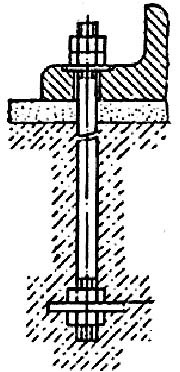
Болт изогнутый
Болт с анкерной плитой
[Пособие по проектированию анкерных болтов для крепления строительных конструкций и оборудования (к СНиП 2.09.03)]
Тематики
Обобщающие термины
Синонимы
EN
- anchor bolt
- anchor screwbolt
- anchoring screw
- drift bolt
- expansion-shell anchor bolt
- foundation bolt
- hold-down bolt
- holding-down bolt
- lewis
- lewis bolt
- masonry bolt
- plate bolt
- rag
- rag bolt
- rag nail
- screw-in anchor
- sill anchor
- stay
- stay rod
- staybolt
- stone bolt
- swedge anchor
- tie bar
- truss bolt
- wall screw
DE
FR
Русско-английский словарь нормативно-технической терминологии > анкерный болт
-
12 कोविदारः _kōvidārḥ _रम् _ram
कोविदारः रम् N. of a tree; चित्तं विदारयति कस्य न कोविदारः Ṛs.3.6; U.5.1.*****कोशः, -शम् (षः, -षम्) [कुश् (ष्) आधारादौ घञ् कर्तरि अच् वा Tv.]1 A vessel for holding liquids, a pail.-2 A bucket, cup.-3 A vessel in general.-4 A box, cupboard, drawer, trunk; Rv.6.47.23; स एष कोशो वसुधानस्तस्मिन्विश्वमिदं श्रितम् Ch. Up.3.15.1.-5 A sheath, scabbard; Ki.17.45.-6 A case, cover, covering.-7 A store, mass; ईश्वरः सर्वभूतानां धर्मकोशस्य गुप्तये Ms.1.99.-8 A store-room.-9 A treasury, an apartment where money is kept; Ms.8.419.-1 Treasure, money, wealth; निःशेषविश्राणितकोषजातम् R.5.1; (fig. also); कोशस्तपसः K.45; कोशपूर्वाः सर्वारम्भाः Kau. A.2.8.-11 Gold or silver wrought or unwrought.-12 A dictionary, lexicon, vocabulary.-13 A closed flower, bud; सुजातयोः पङ्कजकोशयोः श्रियम् R.3.8,13.29; इत्थं विचिन्तयति कोशगते द्विरेफे हा हन्त हन्त नलिनीं गज उज्जहार Subhāṣ.-14 The stone of a fruit.-15 A pod.-16 A nut-meg, nut-shell.-17 The cocoon of a silk-worm; निजलालासमायोगात्कोशं वा कोश- कारकः Y.3.147.-18 Vulva, the womb.-19 An egg.-2 A testicle or the scrotum.-21 The penis.-22 A ball, globe.-23 (In Vedānta phil.) A term for the five (अन्न, प्राण, मनः, विज्ञान, आनन्द) vestures (sheaths or cases) which successively make the body, enshrining the soul.-24 (In law) A kind of ordeal; the defen- dant drinks thrice of the water after some idol has been washed in it; cf. Y.2.112.-25 A house.-26 A cloud.-27 The interior of a carriage.-28 A kind of bandage or ligature (in surgery).-29 An oath; कोशं चक्रतु- रन्योन्यं सखङ्गौ नृपडामरौ Rāj. T.2.326.-3 The pericarp of a lotus.-31 A piece of meat.-32 A cup used in the ratification of a treaty of peace; देवी कोशमपाययत् Rāj. T.7.8,75,459,492.-शी (-षी) 1 A bud.-2 A seed-vessel.-3 The beard of corn.-4 A shoe, sandal (पादुका).-Comp. -अधिपतिः, -अध्यक्षः a treasure, pay- master; (cf. the modern 'minister of finance').-2 an epithet of Kubera.-अगारः, -रम् a treasurer, store-room.-कारः 1 one who makes scabbards.-2 a lexicographer.-3 the silk-worm while in the cocoon; भूमिं च कोशकाराणाम् Rām.4.4.23.-4 a chrysalis.-5 sugar-cane.-कारकः a silk-worm. Y.3.147.-कृत् m. a kind of sugar-cane.-गृहम् a treasury, store-room; R.5.29.-ग्रहणम् undergoing an ordeal.-चञ्चुः the (Indian) crane.-नायकः, -पालः 1 a treasurer.-2 An epithet of Kubera.-पेटकः, -कम् a chest in which treasure is kept, coffer.-फलम् 1 a kind of perfume.-2 a nut- meg.-वारि water used at an ordeal; Ks.119.35,42.-वासिन् m. an animal living in a shell, a chrysalis.-वृद्धिः f.1 increase of treasure.-2 enlargement of the scrotum.-वेश्मन् n. a treasury; भाण्डं च स्थापयामास तदीये कोषवेश्मनि Ks.24.133.-शायिका a clasped knife, knife lying in a sheath.-शुद्धिः f. purification by ordeal.-स्कृ m. a silk-worm; त्यजेत कोशस्कृदिवेहमानः Bhāg.7.6.13.-स्थ a. incased, sheathed. (-स्थः) an animal living in a shell (as a snail).-हीन a. deprived of riches, poor. -
13 sgranare
sgranare1 v.tr. ( piselli, fagioli ecc.) to shell, to hull; ( granoturco) to husk; ( cotone) to gin // sgranare gli occhi, to open one's eyes wide // sgranare il rosario, to say the rosary (o to tell one's beads).◘ sgranarsi v.intr.pron. to crumble: una pietra che si sgrana rapidamente, stone that crumbles quickly.* * *[zgra'nare]verbo transitivo1) (estrarre i semi) to hull, to shell, to shuck AE [fagioli, piselli]; to husk [ mais]2) fig.sgranare il rosario — to say o tell one's beads
3) (spalancare)sgranare gli occhi — to goggle, to open one's eyes wide
* * *sgranare/zgra'nare/ [1]3 (spalancare) sgranare gli occhi to goggle, to open one's eyes wide. -
14 πῶρος (1)
Grammatical information: m.Meaning: `tuff' (Arist., Thphr., hell. inscr. a.o.), in Anatolia `stone- or chalk-formation, concretion, stone in the bladder, kidney etc.' (Hp., Arist. a.o.).Compounds: As 1. member a.o. in πωρ-όμφαλον n. subst. bahuvrihi `concretion in the navel' (Gal.).Derivatives: 1. Dimin. πωρ-ίον, - ίδιον n. `callosity' (medic.); 2. adj. πώρ-ινος `of tuff' (Hdt., Ar., hell. inscr. a.o.), - εία λίθος `tuff' (Str.), - ώδης 'π. -like' (Gal.); 3. verb πωρ-όομαι, - όω, also w. δια-, ἐπι-, συν-, `to petrify, to harden, to grow together in a concretion, grow hard' (Hp., Arist., Thphr., NT) with ( ἐπι-) πώρ-ωμα, - ωσις `petrification, concretion' (Hp., Gal., NT). 4. πωρ-ίασις f. `callus on the eye-lid' (Gal.), as if from *πωρ-ιᾶν (Schwyzer 732).Origin: PG [a word of Pre-Greek origin]Etymology: Orig. indicating a kind of stone and at home in building, πῶρος with its derivv. was used esp. by the medics. No etymology. Acc. to Haupt Actes du 16. congr. des orient. (1912) 84f. from Assyr. pûlu `shell-lime'. With πωρεῖν κηδεύειν, πενθεῖν, πωρῆσαι λυπῆσαι H. and πωρητύς f. `pain' (Antim.) no connection seems possible. Cf. however ταλαίπωρος. -- Furnée 328 connects *ψῶρος in ψωρίτης λίθος `a kind of marble' (Cyran 46), and Hitt. purut- `loam, chalk, mortar'.Page in Frisk: 2,635Greek-English etymological dictionary (Ελληνικά-Αγγλικά ετυμολογική λεξικό) > πῶρος (1)
-
15 убеждённый
1) General subject: certain, confirmed, convinced, dedicated (о стороннике чего-либо), earnest, hard shell, out and out, sartin, satisfied, secure (в чем-л.), straight out, straight-out, strong, diehard, die-hard2) American: hard-shell3) Religion: committed4) Diplomatic term: out-and-out5) Makarov: secure6) Emotional: stone -
16 pura
------------------------------------------------------------[Swahili Word] -pura[English Word] beat[Part of Speech] verb[Swahili Example] pura nguo[English Example] wash clothes.------------------------------------------------------------[Swahili Word] -pura[English Word] use cosmetics[Part of Speech] verb------------------------------------------------------------[Swahili Word] -pura[English Word] knock down (fruit from a tree with a stick or stone)[Part of Speech] verb[Swahili Example] Alipura matunda[English Example] (s)he knocked down fruits (from a tree)------------------------------------------------------------[Swahili Word] -pura[English Word] pound[Part of Speech] verb[Swahili Example] pura nguo[English Example] pound clothes.------------------------------------------------------------[Swahili Word] -pura[English Word] shell (peas or beans)[Part of Speech] verb[Swahili Example] Mama alizipura maharagwe kabla ya kuzipika[English Example] The mother removed the shell from the beans before cooking them------------------------------------------------------------[Swahili Word] -pura[English Word] strike[Part of Speech] verb------------------------------------------------------------[Swahili Word] -pura[English Word] strip off (grains of corn, etc)[Part of Speech] verb[Swahili Example] pura mahindi[English Example] strip off maize grains------------------------------------------------------------[Swahili Word] -pura[English Word] thresh (grain)[Part of Speech] verb------------------------------------------------------------[Swahili Word] -pura[English Word] strip off with the thumb[Part of Speech] verb[Swahili Example] dawa ya meno katika mkakasi wa kupura [Abd]------------------------------------------------------------ -
17 क्षुद्र _kṣudra
क्षुद्र a. [क्षुद्-कर्तरि रक्] (compar. क्षोदीयस्; superl. क्षोदिष्ठ)1 Minute, small, tiny, little, trifling.-2 Mean, low, vile, base; क्षुद्रे$पि नूनं शरणं प्रपन्ने Ku.1.12.-3 Wicked.-4 Cruel.-5 Poor, indigent.-6 Miserly, niggardly; Me.17.-7 Diminutive, short.-8 Trifling, insignificant.-9 Unimportant, minor.-द्रः 1 A small particle of rice.-2 A bee or wasp.-द्रा 1 A bee; क्षुद्राभिरक्षुद्रतराभि- राकुलम् Śi.12.54.-2 A fly or gnat.-3 A woman maimed or crippled.-4 A quarrelsome woman.-5 A prostitute, whore, harlot; उपसृष्टा इव क्षुद्राधिष्ठितभवनाः K.17.-6 A base or despicable woman.-7 A dancing girl.-द्रम् Ved. A particle of dust, flour, meal; अव क्षुद्रमिव स्रवेत Rv.1.129.6.-Comp. -अञ्जनम् a kind of unguent applied to the eyes in certain diseases.-अन्त्रः the small cavity of the heart.-उलूकः a small owl.-कम्बुः a small shell.-कुलिशः a precious stone.-कुष्ठम् a mild form of leprosy.-घण्टिका 1 small bell.-2 a girdle of small bells.-चूडः N. of a bird.-चन्दनम् red sandal-wood.-जन्तुः any small animal.-तण्डुलः a grain of rice.-तातः a father's brother, uncle.-दंशिका a small gadfly.-पत्रा a kind of sorrel (Oxalis Pusilla).-पदम् a kind of measure of length (equal to 1 Aṅgulas).-बुद्धि a. low-minded, mean.-रसः 1 honey.-2 (pl.) base pleasures; Bhāg.5.13.1.-रोगः a minor disease; (44 are enumerated by Suśruta).-वंशा N. of a plant (Mimosa Pudica).-शर्करा a kind of suger (coming from यवनाल).-शार्दूलः leopard.-शङ्खः a small conch-shell.-सुवर्ण low or bad gold; i. e. brass.-हन् m. an epithet of Śiva. -
18 στρόβιλος
A round ball, στρόβιλος ἀμφάκανθον εἱλίξας δέμας rolling its prickly body into a ball, of the hedgehog ([etym.] ἐχῖνος), Ion Trag.38.4; ὀστράκου ς. the ball of an egg-shell, i.e. a round egg-shell, Lyc.506, cf. 89.3 cyclone, whirlwind, Arist.Mu. 395a7, Epicur.Ep.2p.47U., Men.536.4 (metaph., Id.Sam. 210); τρικυμίαι καὶ ς. Luc.Tox.19, cf. Aristid.1.164J., Poll.4.159.6 later (Phryn.374, Gal.6.591, 15.848), = κῶνος, pine-cone, Thphr.HP3.9.1, POxy.1088.55 (i A.D.), 1211.6 (ii A.D.), etc.;κόκκοι στροβίλου IG14.966.12
([place name] Rome).7 fir, pine, PCair.Zen.157 (iii B.C.), Plu.2.648d.8 stone pine, Pinus Cembra, Dsc.1.69, Gp.11.11.1.9 winch, or perh. rotating shaft, POxy. 1704.11 (iii A.D.); τὸ μυλαῖον σὺν τῷ στροβίλλῳ (sic) PMerton 39.9 (v/vi A.D.).11 dub. sens. in PMag.Osl.1.339, BCH51.395. [[pron. full] ῑ regularly, as in ll.cc.; but [pron. full] ῐ in signf. 6, AP6.232 (Crin.(?), dub.).]Greek-English dictionary (Αγγλικά Ελληνικά-λεξικό) > στρόβιλος
-
19 анкерный болт
2) Engineering: anchor screwbolt, hold-down bolt, holddown bolt, lewisson, plate bolt, rag bolt, rag-bolt, rockbolt, screw-in anchor, sill anchor, stay rod, staybolt, stone bolt, swedge anchor, tie bar, tie rod, wall screw, plate screw3) Construction: binding bolt, connecting iron, drift bolt, expansion-shell anchor bolt, foundation screw, ground bolt, holding down bolt, holding-down bolt, rag nail, stone bolt (для заделки в камень), swedge anchor (нарезанный на одном конце и сплющенный в нескольких местах), tie bolt, truss bolt, rag, stay4) Railway term: anchor, crown stay bolt, long bolt, set bolt, through tie bolt5) Automobile industry: cotter bolt, fang bolt, lewis bolt, stay bolt6) Mining: rag bolt (заершённый или с расширенным концом), roof bolt7) Oil: foundation bolt, rag bolt (в оттяжках буровой вышки), tie-down bolt (в оттяжках буровой вышки), anchor bolt, anchor screw8) Mechanic engineering: pillar bolt9) Drilling: jag bolt11) Cables: staybolt (фундаментный)12) General subject: lifting bolt14) Gold mining: rock bolt15) Building structures: red head (что то типа anchor bolts and chemical bolts) -
20 λέπας
Grammatical information: n. (only nom.-acc. sg.)Meaning: `bare rock, mountain' (Simon., A., E., Th.).Derivatives: λεπαῖος `rocky' (E.); λεπάς, - άδος f. `limpet' (Alc. Z 36, 2 [not certain], Epich., com., Arist.), as the animal clings with his foot to the rock (cf. H. λεπάδες τὰ πρὸς ταῖς πέτραις κεκολλημένα κογχύλια); acc. to WP. 2, 429 and W.-Hofmann s. lepidus however of λέπος, λεπίς `shell, scale'.Origin: PG [a word of Pre-Greek origin]X [probably]Etymology: From λέπας: λεπαστή (- άστη) f. `limpet-like beaker' (com.) with λεπαστίς, - ίδος `id.' (vase-inscr., H.); on the formation Schwyzer 503; Lat. LW [loanword] lepista, - esta; λέπαστρον σκεῦός τι ἁλιευτικόν H. (cf. δέπαστρον a.o.; Chantraine Form. 333 f.); λεπαδεύομαι 'collect λ.' (H., Phot.). The similarity between λέπας and Lat. lapis, - idis m. (f.) `stone' shows a common origin (against this Ernout-Meillet s. v.); the Lat. a-vowel is explained as ablaut (s. W.-Hofmann s. v. [most improbable]), also as derailment (after capis `bowl with one handle' [idem]; Petersen Lang. 14, 49[?]). WP. 2, 431 considers (doubting) a loan from a mediterranean language; thus Hubschmid 3me Congrès int. de toponymie et d'anthroponymie II 189 (to Iberorom. lapa `flat stone, hollow' etc). Improbable Alessio Onomastica 2, 189; s. Belardi Doxa 3, 212. - The old connection with λέπω `peel off' ( λέπας `bare rock') is still (despite Bq) considered.Page in Frisk: 2,105Greek-English etymological dictionary (Ελληνικά-Αγγλικά ετυμολογική λεξικό) > λέπας
См. также в других словарях:
stone fruit — noun fleshy indehiscent fruit with a single seed: e.g. almond; peach; plum; cherry; elderberry; olive; jujube • Syn: ↑drupe • Derivationally related forms: ↑drupaceous (for: ↑drupe), ↑drupelet … Useful english dictionary
shell — less, adj. shell like, adj. /shel/, n. 1. a hard outer covering of an animal, as the hard case of a mollusk, or either half of the case of a bivalve mollusk. 2. any of various objects resembling such a covering, as in shape or in being more or… … Universalium
Shell — Shell, n. [OE. shelle, schelle, AS. scell, scyll; akin to D. shel, Icel. skel, Goth. skalja a tile, and E. skill. Cf. {Scale} of fishes, {Shale}, {Skill}.] 1. A hard outside covering, as of a fruit or an animal. Specifically: (a) The covering, or … The Collaborative International Dictionary of English
Shell bit — Shell Shell, n. [OE. shelle, schelle, AS. scell, scyll; akin to D. shel, Icel. skel, Goth. skalja a tile, and E. skill. Cf. {Scale} of fishes, {Shale}, {Skill}.] 1. A hard outside covering, as of a fruit or an animal. Specifically: (a) The… … The Collaborative International Dictionary of English
Shell button — Shell Shell, n. [OE. shelle, schelle, AS. scell, scyll; akin to D. shel, Icel. skel, Goth. skalja a tile, and E. skill. Cf. {Scale} of fishes, {Shale}, {Skill}.] 1. A hard outside covering, as of a fruit or an animal. Specifically: (a) The… … The Collaborative International Dictionary of English
Shell cameo — Shell Shell, n. [OE. shelle, schelle, AS. scell, scyll; akin to D. shel, Icel. skel, Goth. skalja a tile, and E. skill. Cf. {Scale} of fishes, {Shale}, {Skill}.] 1. A hard outside covering, as of a fruit or an animal. Specifically: (a) The… … The Collaborative International Dictionary of English
Shell flower — Shell Shell, n. [OE. shelle, schelle, AS. scell, scyll; akin to D. shel, Icel. skel, Goth. skalja a tile, and E. skill. Cf. {Scale} of fishes, {Shale}, {Skill}.] 1. A hard outside covering, as of a fruit or an animal. Specifically: (a) The… … The Collaborative International Dictionary of English
Shell gland — Shell Shell, n. [OE. shelle, schelle, AS. scell, scyll; akin to D. shel, Icel. skel, Goth. skalja a tile, and E. skill. Cf. {Scale} of fishes, {Shale}, {Skill}.] 1. A hard outside covering, as of a fruit or an animal. Specifically: (a) The… … The Collaborative International Dictionary of English
Shell gun — Shell Shell, n. [OE. shelle, schelle, AS. scell, scyll; akin to D. shel, Icel. skel, Goth. skalja a tile, and E. skill. Cf. {Scale} of fishes, {Shale}, {Skill}.] 1. A hard outside covering, as of a fruit or an animal. Specifically: (a) The… … The Collaborative International Dictionary of English
Shell ibis — Shell Shell, n. [OE. shelle, schelle, AS. scell, scyll; akin to D. shel, Icel. skel, Goth. skalja a tile, and E. skill. Cf. {Scale} of fishes, {Shale}, {Skill}.] 1. A hard outside covering, as of a fruit or an animal. Specifically: (a) The… … The Collaborative International Dictionary of English
Shell jacket — Shell Shell, n. [OE. shelle, schelle, AS. scell, scyll; akin to D. shel, Icel. skel, Goth. skalja a tile, and E. skill. Cf. {Scale} of fishes, {Shale}, {Skill}.] 1. A hard outside covering, as of a fruit or an animal. Specifically: (a) The… … The Collaborative International Dictionary of English
